Rocket Lab reported its second quarter on Monday, 10 August 2026, after the market closed. We are writing about it today.
Errors or inaccuracies are possible. Spotted something that looks wrong? Write to me and I will correct it.
What Rocket Lab Does
Rocket Lab sells two things: launches, and spacecraft.
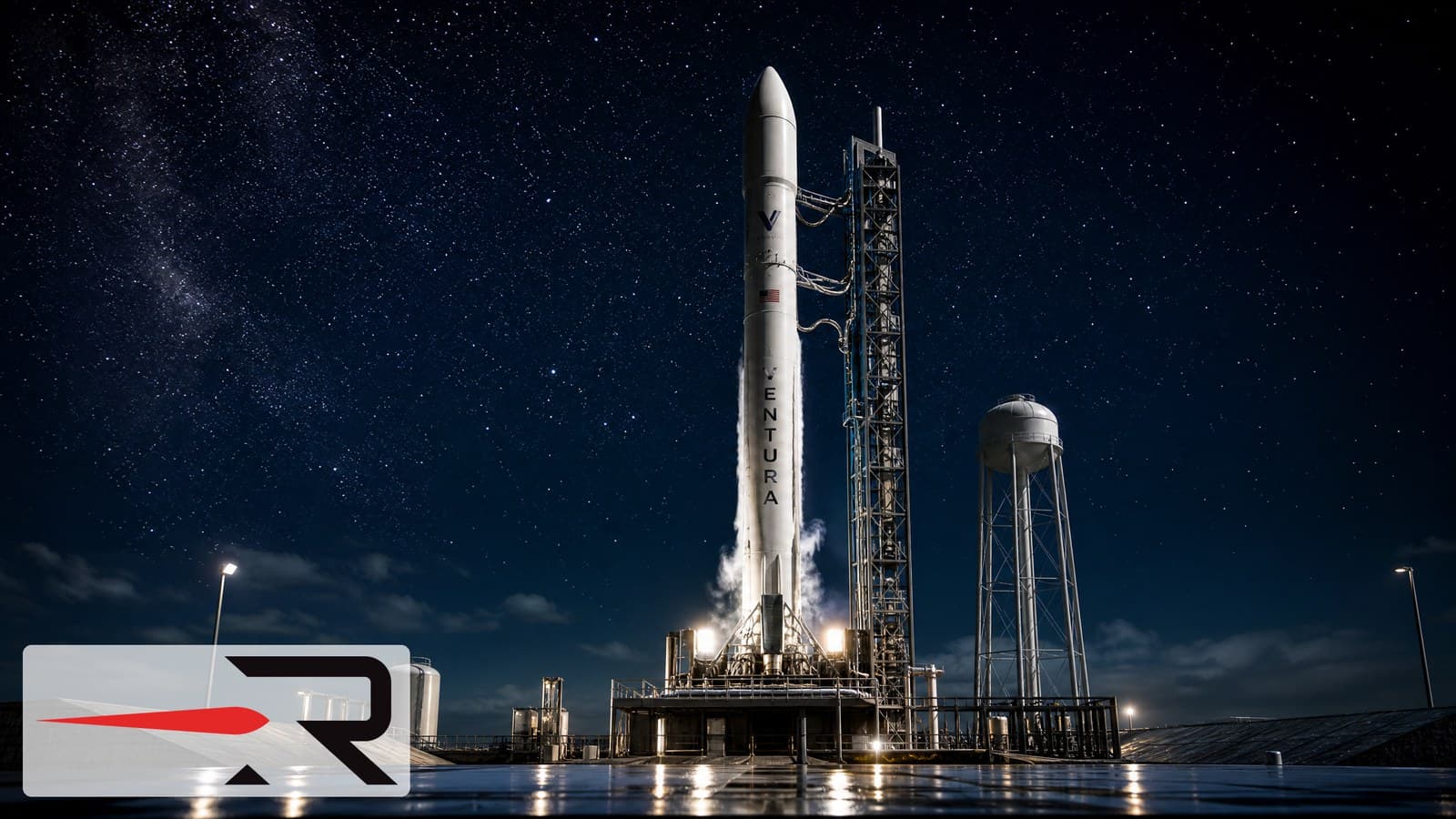
The launches run on Electron, a small rocket that lifts light payloads to orbit, and on a suborbital variant called HASTE used for defence systems testing. In development: Neutron
- a medium-lift reusable rocket intended to put the company head to head with routes that today belong to SpaceX.
The spacecraft are the larger business in practice. The company builds complete satellites and components for them - propulsion systems, solar panels, flight computers - both for external customers and for itself.
The strategy, in one line: be the company that builds the satellite, launches it, and operates it. The Iridium acquisition announced in the quarter is the third step - moving from equipment and launch supplier to operator of its own communications network.
The Quarter
| The quarter | A year ago | |
|---|---|---|
| Revenue | $234.1 million | $144.5 million |
| Product revenue | $181.3 million | $92.7 million |
| Service revenue | $52.7 million | $51.8 million |
| Gross profit | $84.6 million · roughly 36.1% | $46.4 million · roughly 32.1% |
| Non-GAAP gross profit | $97.0 million · 41.5% | $53.4 million · 36.9% |
| Research and development, net | $82.4 million | $66.1 million |
| Selling, general and administrative | $59.7 million | $39.9 million |
| Operating loss | $57.5 million | $59.6 million |
| Net loss | $49.3 million | $66.4 million |
| Loss per share | $0.08 | $0.13 |
| Adjusted EBITDA loss | $8.8 million | $27.6 million |
Revenue rose 62% to a record, and almost all of the growth came from products - product revenue nearly doubled, from $92.7 million to $181.3 million, while service revenue barely moved.
And this is a quarter where the margin genuinely improved: GAAP gross margin rose from roughly 32.1% to roughly 36.1%, and the non-GAAP margin from 36.9% to 41.5%.
Net loss narrowed from $66.4 million to $49.3 million - helped in part by interest expense falling from $7.4 million to $0.6 million, and interest income rising from $5.0 million to $16.5 million on a far larger cash balance.
And the adjusted EBITDA loss narrowed from $27.6 million to $8.8 million - meaning the company is approaching the point where ongoing operations stop burning cash.
The Backlog, Which Is the Strong Part
Backlog reached $2.36 billion, up 137% in a year.
That is a record, and more than double the level of a year ago. For scale: revenue in the quarter was $234 million. The backlog is worth roughly ten quarters at the current run rate.
And what went into it during and just after the quarter:
- More than $437 million in new launch contracts across Electron, HASTE and Neutron, taking the launch backlog to more than 90 launches - the highest in company history
- A $397 million contract to deliver Flatellite spacecraft launching on Neutron for the US Space Force's SB-AMTI programme, which detects, tracks and monitors airborne threats from space. Rocket Lab is one of only two vendors delivering both launch and spacecraft on that programme
- More than $160 million across two contracts to build three geostationary satellites, including a prime contract with Space Systems Command for two space domain awareness satellites. This is the company's first move into geostationary satellite production and operation for the US Government
Beyond that, the company reports that more than $1 billion in new contracts has already been signed in the third quarter across launch and space systems (including options across various contracts).
The Number That Qualifies All of It
Third-quarter guidance asks for more revenue at a lower margin.
What management expects:
- Revenue: $250 to $265 million - growth of 7% to 13% over the reported quarter
- GAAP gross margin: 29% to 31% - against roughly 36.1% in the reported quarter
- Non-GAAP gross margin: 35% to 37% - against 41.5% in the reported quarter
- GAAP operating expenses: $143 to $149 million
- Adjusted EBITDA loss: $17 to $23 million - against an $8.8 million loss in the reported quarter
In other words, by the company's own guidance, next quarter will be bigger and less profitable, and the adjusted EBITDA loss will roughly double to triple.
The plausible explanation is Neutron and the acquisitions: a rocket in development approaching first flight consumes cost before it produces revenue, and closed acquisitions bring in a new cost base. The company also expects $18 to $20 million of stock-based compensation in the third quarter.
But a plausible explanation is not proof, and this is exactly where I put an asterisk.
Neutron: Where It Stands
This is the company's big question, and the release answers it in measured terms.
The company reports critical milestones achieved across assembly, integration and testing of first-flight hardware, and notes that production of the Stage 1 tank is currently aligned with the target delivery of Neutron to the launch pad in the fourth quarter of 2026.
Note the wording: delivery to the pad in the fourth quarter - not a launch in the fourth quarter. That is a material difference, and the company phrases it carefully.
Also in the Quarter
The GHOST system: the company introduced a globally deployable launch system supporting suborbital and orbital launches from anywhere in the world. The first location, to be called Launch Complex 4, will be at the Pacific Spaceport Complex in Kodiak, Alaska, with two pads. Operational debut is planned for a suborbital launch from Alaska in 2027.
Acquisitions: the Mynaric and Motiv acquisitions closed, and an agreement to acquire Iridium was announced.
Europe: Rocket Lab Germany GmbH was formally established, to support potential scaling of satellite and component manufacturing in Germany and to provide commercial and sovereign capabilities to European customers.
The Balance Sheet
Cash and cash equivalents: $2,129.5 million as of 30 June 2026, against $828.7 million at the end of 2025. Plus $172.7 million in marketable securities.
That is an increase of more than $1.3 billion in cash in six months, which is what makes both the Iridium acquisition and the funding of Neutron possible without pressure.
The weighted average share count rose from 515.1 million to 629.7 million - so dilution is not trivial, and third-quarter guidance already refers to 641 million basic shares, of which roughly 41 million are Series A Convertible Participating Preferred.
The Market Reaction
The report was published after the close in New York, so no regular session reflecting it has taken place yet.
The stock closed Monday at $80.04, against $82.83 on Friday - but that close preceded the report and is not a reaction to it. The market's response will only be visible in Tuesday's session.
הזווית שלי
דעה אישית של אילן אברמוב - לא ייעוץ ולא המלצה
This is a report where it is very easy to read only half of it, and both halves are real.
The first half is excellent and not in dispute: record revenue growing 62%, a backlog more than doubling to $2.36 billion, a margin four percentage points better, a narrower loss, and $2.1 billion in the bank. And most importantly - that backlog is built from long government contracts, not commercial orders that can be cancelled. A $397 million contract from the US Space Force, where the company is one of only two suppliers, is exactly the kind of bottleneck I am looking for.
The second half is the guidance, in which the company itself says next quarter will earn less. A GAAP gross margin of 29% to 31% after a quarter at 36%, and an EBITDA loss widening from $8.8 million to $17-23 million. That is not a warning sign about demand - revenue is actually expected to rise. It is a sign that the cost of producing that revenue is going up.
And I think the right explanation is simple, and also legitimate: the company is paying for Neutron now. A medium-lift rocket in development is almost pure expense until first flight, and closing acquisitions add a cost base before they add synergy. A company building its next engine looks worse in precisely the year before the engine works.
What I am not willing to do is treat that as free. If the margin falls in the third quarter as planned and then falls again in the fourth, that stops being investment in development and becomes structural erosion. And the distinction between the two will only become clear two reports from now.
What I will watch is the wording on Neutron. Today the release says first-stage tank production is "currently aligned with the target delivery of Neutron to the launch pad in Q4 2026". That is a very careful sentence, and it does not say when the rocket flies. If next quarter the wording is unchanged or softer, the schedule has moved. If a launch date appears in it, that is this company's turning point.


