Rigetti Computing filed its second-quarter 2026 report on 6 August 2026, and we are writing about it today.
Errors or inaccuracies are possible. Spotted something that looks wrong? Write to me and I will correct it. Even so, errors, inaccuracies or omissions are possible, and the figures may change after publication. Spotted something that looks wrong? Write to me and I will correct it.
What the company does
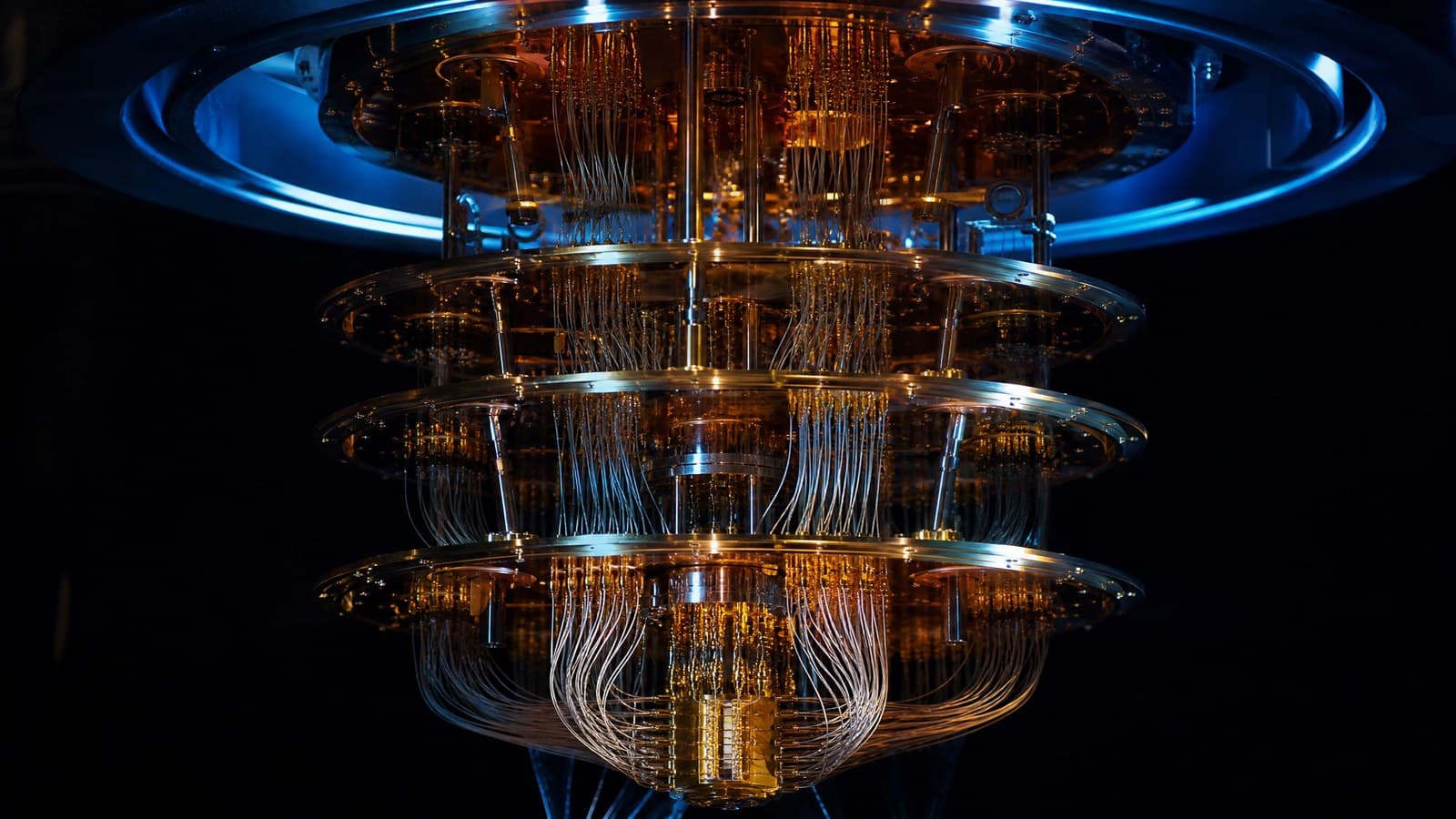
Rigetti builds quantum computers. A short explanation for anyone who has not come across this: a normal computer works with bits, and each bit is either a zero or a one. A quantum computer works with qubits, which can hold a combination of both states at once. In theory that lets it solve certain classes of problem - materials simulation, optimisation, cryptography - far faster than a conventional machine can. In practice the field is still very early, and the companies in it mainly sell access to experimental systems.
Rigetti sells access to its systems and also deploys physical systems at the customer site, what it calls on-premises deployments. Its customer base, per the company release, spans government, academic and commercial buyers.
Two terms worth knowing, because they appear in the filing:
- Gate fidelity - the accuracy rate of a single operation on a qubit. Quantum operations run in long sequences, so a small error in one operation compounds across the whole computation. The gap between 99.1 percent and 99.9 percent sounds trivial, but it is a tenfold difference in error rate.
- Gate speed - how long a single operation takes. The faster it is, the more operations can be packed in before the quantum state falls apart.
The system the company currently discloses, Cepheus-1-108Q, is reported at approximately 99.9 percent median single-qubit gate fidelity, approximately 99.1 percent median two-qubit gate fidelity and gate speeds of approximately 60 nanoseconds. At smaller qubit counts, higher median two-qubit fidelities were demonstrated: 99.8 percent at the 9-qubit level and 99.6 percent at the 36-qubit level.
The quarter
| Item | Q2 2026 | Q2 2025 |
|---|---|---|
| Revenue | $5.138 million | $1.801 million |
| Cost of revenue | $2.950 million | $1.235 million |
| Gross profit | $2.188 million | $0.566 million |
| Gross margin (arithmetic from the filing line items) | 42.6 percent | 31.4 percent |
| Research and development | $20.728 million | $13.522 million |
| Selling, general and administrative | $9.522 million | $6.926 million |
| Total operating expenses | $30.250 million | $20.448 million |
| Loss from operations | Loss of $28.062 million | Loss of $19.882 million |
| Interest income | $5.058 million | $3.042 million |
| Change in fair value of derivative warrant liabilities | Charge of $29.602 million | Charge of $20.557 million |
| GAAP net loss | Loss of $52.606 million | Loss of $39.654 million |
| GAAP net loss per share, basic and diluted | $(0.16) | $(0.13) |
| Non-GAAP net loss (company definition) | Loss of $15.984 million | Loss of $13.286 million |
| Non-GAAP net loss per share, basic and diluted | $(0.05) | $(0.04) |
| Stock-based compensation | $7.020 million | $3.554 million |
| Weighted average shares, basic and diluted | 333.215 million | 298.254 million |
Revenue rose 185 percent. That is mathematically correct, and both bases are positive, so the percentage carries meaning. But it is worth remembering what sits behind it: the absolute increase is $3.3 million, off a base of $1.801 million. Percentage growth at this scale says almost nothing about durable commercial traction.
Gross profit of $2.188 million covers roughly 7 percent of the quarter's operating expense base of $30.250 million. Research and development alone, at $20.728 million, is about four times total revenue.
The operating loss widened by $8.18 million, from a loss of $19.882 million to a loss of $28.062 million. I state the change in dollars rather than as a percentage, because when the base is itself a loss, a percentage change is a meaningless number. This line is the cleanest read on the underlying business, and it deteriorated.
Interest on the cash pile earned about as much as the entire quantum business
This is, to my mind, the single most important line in the whole report.
Interest income for the quarter was $5.058 million. Total revenue was $5.138 million. The gap between them is $80 thousand. Put differently, Rigetti's cash and investment portfolio contributed about as much to the profit and loss statement as the entire quantum computing business did.
A year earlier interest income was $3.042 million against revenue of $1.801 million, so back then interest income was actually larger than revenue. The gap has closed, but only because revenue grew off a tiny base, not because interest income shrank.
The practical implication is simple: a decline in market rates, or a drawdown of the portfolio to fund operations, hits the P&L about as hard as losing the product line would. This is not income generated by the business, and it is not income anyone should assume stays constant.
The pile itself: $541.3 million of cash and marketable investments as of June 30, 2026. The breakdown matters as much as the headline - only $27.763 million of that is cash and cash equivalents, $365.9 million is short-term available-for-sale investments and $147.6 million is long-term. The company states it has no debt. For comparison, the sum of those three lines stood at $589.8 million at December 31, 2025. The cash line itself fell from $57.183 million at June 30, 2025 to $27.763 million today, which means the liquidity story here rests on the investment portfolio, not on cash.
Where the $52.6 million loss actually comes from
GAAP net loss for the quarter was $52.606 million, against a loss of $39.654 million a year earlier. The loss widened by $12.95 million. Again, no percentage change, because the base is a loss.
But that number misleads if it is read at face value. Of the loss, $29.602 million is a charge from the change in fair value of derivative warrant liabilities. That is an accounting revaluation of warrants, not a business event and not a cash payment. That single line is larger than the entire operating loss of the quarter, which was $28.062 million.
This cuts both ways, and both directions need saying:
- The reported loss looks worse than the business, because it includes a mark that has nothing to do with operations.
- The non-GAAP loss looks better than the business, for exactly the opposite reason.
Loss per share was $(0.16) against $(0.13), with basic and diluted identical in both periods. Part of that relative cushioning comes from the fact that weighted average shares rose to 333.215 million from 298.254 million, about 11.7 percent more shares. The dollar loss is being spread across a materially wider share base than a year ago. Shares issued and outstanding stood at 333,676,881 at June 30, 2026, against 331,282,895 at December 31, 2025.
The first half, the cash flow and the balance sheet
First-half 2026 revenue was $9.538 million against $3.273 million in the comparable half, up 191 percent off a small base.
The half-year bottom line needs particular care. The company went from net income of $2.965 million in the first half of 2025 to a net loss of $19.497 million in the first half of 2026. I do not compute a percentage here, because a change of sign does not produce a meaningful percentage.
More importantly: last year's profit was not an operating profit at all. It came from $32.7 million of warrant fair-value gains and $6.6 million of earn-out gains. The first half of 2025 itself carried a $41.514 million operating loss. In the first half of 2026 the operating loss was $54.013 million, a widening of $12.5 million. So the swing from profit to loss mainly reflects the warrant mark reversing direction, not an operating collapse.
Net cash used in operating activities in the half was $31.993 million against $29.820 million in the comparable half - broadly flat despite the wider operating loss, helped by working capital swings.
But that number understates the real spend. Accounts payable rose to $14.0 million from $3.5 million, and of that, $10.1 million is property and equipment purchases recorded in payables that have not yet been paid in cash. At the same time, first-half purchases of property and equipment doubled to $16.404 million from $8.214 million.
Watch what the adjusted measure hides
The non-GAAP net loss the company presents, $15.984 million, is reached by excluding $36.6 million from the $52.606 million GAAP net loss: $29.602 million of warrant fair-value change plus $7.020 million of stock-based compensation. That means roughly 70 percent of the reported loss is stripped out to get to the adjusted number.
The sharper point: the non-GAAP loss of $15.984 million is smaller than the operating loss of $28.062 million. The adjusted measure keeps $5.058 million of interest income inside while taking $7.020 million of stock compensation out, flattering the operating picture by roughly $12 million. Anyone anchoring on the $16.0 million figure is simply not looking at the cost of running Rigetti. Stock-based compensation, incidentally, nearly doubled year over year, from $3.554 million to $7.020 million.
An 8.6x jump in current liabilities that is not new debt
Total current liabilities rose to $105.057 million at June 30, 2026 from $12.152 million at December 31, 2025. It looks dramatic, but it is almost entirely a reclassification: a $78.4 million derivative warrant liability moved from long-term, where it stood at $102.6 million, into current.
This is presentation, not a new operating obligation. But any automated current-ratio or working-capital screen run on the raw balance sheet will produce a distorted picture here, in both directions, so it is worth knowing in advance.
The outlook
The company gave no financial guidance of any kind. The release contains no revenue target, no margin target, no earnings per share target, no operating expense target and no cash target - not for the third quarter of 2026, not for full-year 2026, and not for any other period. For a reader, that means there is no company-supplied yardstick against which the coming quarters can be judged.
What does exist is a technology roadmap, and the company frames it as exactly that rather than as an outlook: a path toward systems with approximately 1,000 qubits, approximately 99.9 percent two-qubit gate fidelity and gate speeds below 50 nanoseconds, over what the company describes as "roughly a three-year time horizon". Set against the current disclosed figures above, that implies an order-of-magnitude improvement in error rate and a meaningful gain in speed.
Two capital commitments are also forward-looking, but unquantified as to timing:
- Up to $100 million in potential funding from the U.S. Department of Commerce, under a letter of intent that is non-binding. This needs reading carefully: the letter contemplates the Department receiving an equity stake "consistent with the total amount of the funding", and the risk factors in the release itself list the ability to enter into definitive agreements and dilution to existing stockholders as risks. This is not committed money.
- A planned investment of up to $100 million in the United Kingdom over the next several years.
Rigetti CEO Dr. Subodh Kulkarni said in the release that the company continued to execute on its strategy by focusing on system performance, advancing its core technology roadmap and broadening deployments at customer sites. In his own words: "we continued to execute on our strategy by focusing on our system performance, progressing our core technology roadmap, and broadening on-premises system deployments". On the demand side he said: "We are seeing broadening engagement across government, academic, and commercial customers", and on the potential funding he pointed to "our recently announced letter of intent with the U.S. Department of Commerce for up to $100 million in potential funding".
הזווית שלי
דעה אישית של אילן אברמוב - לא ייעוץ ולא המלצה
The number that stays with me from this report is not 185 percent growth. It is 5.058 against 5.138. Rigetti's interest income is almost identical to its entire revenue. A company whose financial portfolio contributes to the P&L about as much as its product does is, at this stage, mostly a pile of cash funding an expensive research lab. That is not a criticism of the technology, it is just an accurate description of what the income statement shows.
The GAAP loss is scarier than reality, and the adjusted loss is rosier than it. $29.6 million of the loss is a warrant revaluation, which is accounting noise. But I am not willing to jump from there to the $16.0 million adjusted number, which is smaller than the operating loss itself. The line I read is the operating loss: $28.1 million, and it widened by $8.2 million in a year.
Percentage growth at this stage is almost content-free. $3.3 million of additional revenue. It does not tell me whether durable commercial traction has been built or whether a few pilot contracts were signed. What is clear is that research and development, at $20.7 million for the quarter, is four times revenue, and that the company chose to accelerate its capital spending rather than trim it.
What I will watch next quarter: whether the gap between interest income and operating revenue widens in revenue's favour; whether the operating loss stabilises or keeps widening; whether the Department of Commerce funding converts from a non-binding letter into a definitive agreement, and at what dilution cost; and how fast the $541 million of cash and investments comes down, given that the half-year operating outflow was $32 million and true spend is higher because $10.1 million of equipment purchases have not yet been paid.
And I say this with no recommendation attached: in a company that provides no financial guidance at all, the technology roadmap is the only thing left to measure against, and it speaks to a horizon of roughly three years. Anyone engaging with this story should know they are examining it on that timescale, and that the company itself has not given them a single financial milestone along the way.


