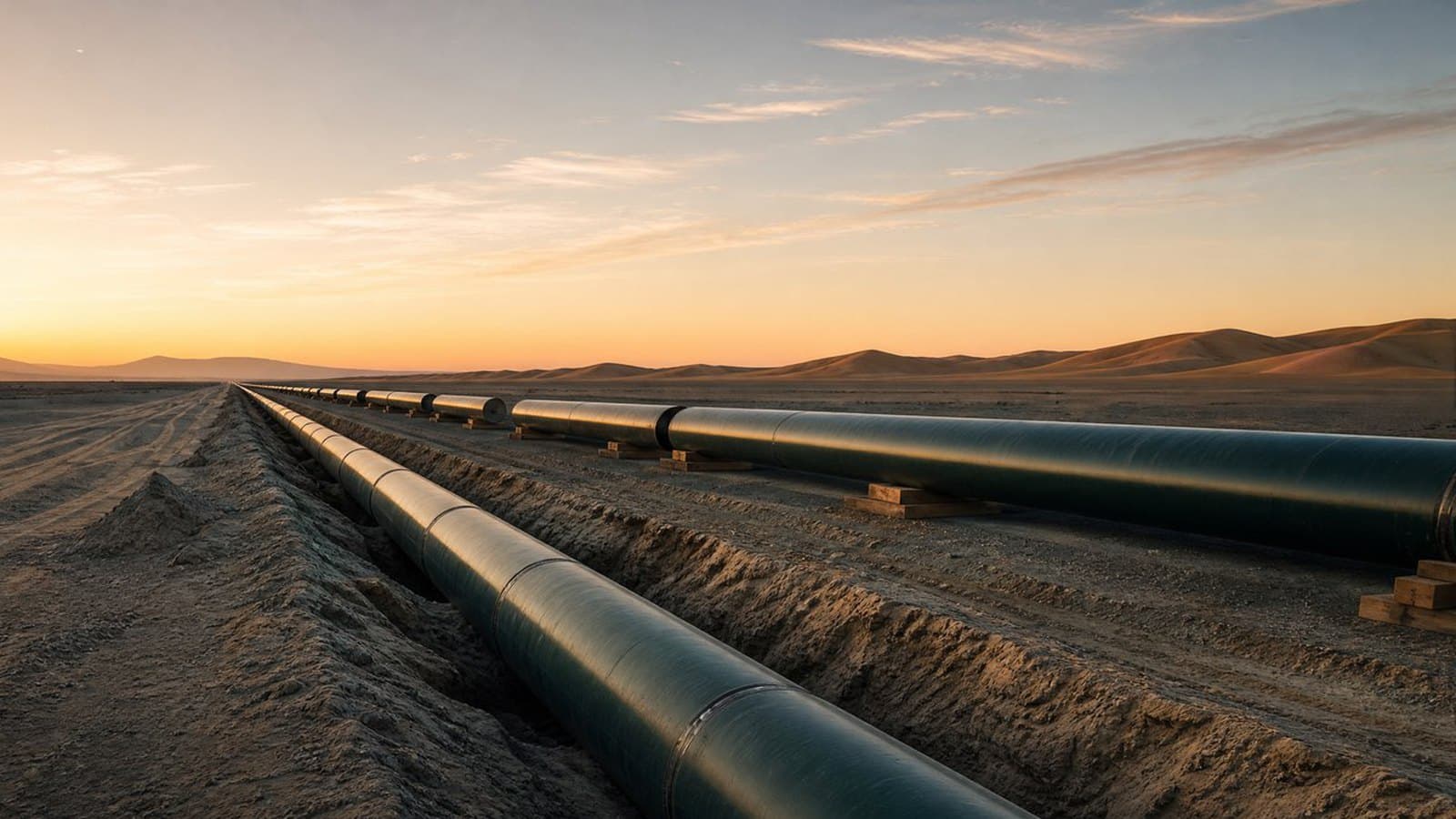
Between 15 and 22 September, oil futures lost about a tenth of their value. Brent fell from $108.75 a barrel to $99.25; WTI fell from $100.75 to $89.93, in five consecutive sessions.
And in that same week, the average US diesel price rose 24.4 cents and set a new record.
Errors or inaccuracies are possible. Spotted something that looks wrong? Write to me and I will correct it.
Correction, 5 October 2026: the original version said Brent futures settled at $98.37 on 22 September. That was an intraday price; the settlement was $99.25, so the weekly decline was 8.7%, not 9.5%. The figures in the article have been corrected.
In brief:
- Oil fell because the market priced a possible end to the war - not because supply returned.
- Diesel rose to a record in the same week - because what is missing is not crude but refining.
- OPEC+ did nothing - no emergency meeting and not a single barrel.
- And the Fed raised rates on 16 September, two days before the shock that justified it began to ease.
The Fall, in Numbers
Closing prices for the front-month contracts:
| Date | Brent | WTI |
|---|---|---|
| 15 September | 108.75 | 100.75 |
| 16 September | 105.83 | 97.51 |
| 17 September | 104.82 | 97.23 |
| 18 September | 103.87 | 96.08 |
| 21 September | 100.34 | 92.37 |
| 22 September | 99.25 | 89.93 |
Brent: -8.7% on the week. WTI: -10.7%.
(Two technical notes worth attention. First, the October WTI contract expired around 22 September, so part of the decline between 18 and 21 September may come from the roll into November rather than from price. Second, physical Brent has traded far above the futures price this month - on 15 September it stood at $130.80 per US Energy Information Administration data, against $108.75 in the contract. All figures in this article are futures prices, so as not to mix two markets.)
And despite the headlines: this was not a record. Physical Brent reached $138.21 on 7 April this year, and the peak after Russia's invasion of Ukraine was $133.18 in March 2022. Even this month's $130.80 is below both.
What Moved the Price
The whole story is the Strait of Hormuz, closed since the beginning of March.
- Per shipping-traffic tracking of the Strait, one vessel transited on 20 September and six on 19 September - against a pre-war average of about 85 a day. (The figure comes from a tracking site citing IMF, UKMTO and Lloyd's data - a secondary source.)
- On 21 and 22 September it was reported that Iran signalled it would reopen the Strait within seven days if the US lifted its blockade on Iranian ports. President Trump said there had been "a very good meeting" with Iranian envoys. Iranian officials subsequently denied that such an offer exists - so the reporting is contradictory, and I present it as a report rather than as fact.
- And in parallel, Saudi Arabia is repairing. The pipeline that bypasses the Strait - 1,201 km from Abqaiq in the east to Yanbu on the Red Sea, with a design capacity of 7 million barrels a day - was attacked on 10-11 September by drones launched from southern Iraq. Two pumping stations were damaged and the entire line was shut. Per regional officials quoted by AP, repairs will take three to five weeks.
So the market did not price barrels that returned. It priced the probability that they will.
And What Is Actually Happening on the Physical Side
From the International Energy Agency's commentary of 18 September:
| Figure | Value |
|---|---|
| Flow through Hormuz, August | 7.6 million barrels a day - down 13.1 million from pre-war |
| Implied deficit | 2.2 million barrels a day in Q2, 1.7 in Q3 |
| Bypass routes | up from 4.1 million barrels a day in February to 7.8 in June |
| Non-Gulf supply added | 2.3 million barrels a day - US 520,000, Brazil 470,000, Kazakhstan 440,000 |
| Global inventories | down 507 million barrels in six months - a pace of 2.8 million a day |
| Global demand | 5.8 million barrels a day below February's level |
The agency also said Saudi crude supply had fallen to its lowest level in more than three decades.
And what did not happen matters just as much: I checked OPEC's press-release archive. Between 6 and 22 September not a single release was published there - no emergency meeting, no production change. The last production adjustment was on 2 August. The US government also announced no further strategic reserve release; the last coordinated release by the energy agency was in March.
The US strategic reserve now stands at 284.9 million barrels - what is left after what has already been spent.
And Meanwhile, in the Middle of the Barrel
And here sits the most interesting gap of the week.
The average US diesel price, per the Energy Information Administration:
| Week | Price per gallon |
|---|---|
| 7 September | 5.967 |
| 14 September | 6.285 |
| 21 September | 6.529 |
A rise of 24.4 cents in the week that crude fell about a tenth, and of $2.78 over the year. In California the price is already $8.246; in the Midwest it jumped 43 cents in a single week.
The explanation is in the weekly inventory report: US distillate inventories stand at 107.9 million barrels - 13% below the five-year average - while refineries run at 96.8% utilisation, and distillate production actually fell to 5.2 million barrels a day. Crude inventories, by contrast, are 1% above the average.
So the barrel is fine. Its middle is not.
And What About Gas
The picture is reversed across the Atlantic. In the US, natural gas stood at $2.71 per unit on 10 September, with inventories 118 billion cubic feet above the five-year average. In Europe, by contrast, the price is €71.32 per megawatt hour - up 121% on the year, although it fell about 8% last week on the same diplomatic reports.
הזווית שלי
דעה אישית של אילן אברמוב - לא ייעוץ ולא המלצה
What I take from this week is that the financial market and the physical market told two different stories on the same days.
Oil futures fell 10% on expectation - a report of contacts, an Iranian denial, and a pipeline still under repair. Diesel rose to a record in the same week, because distillate inventories really are low and refineries really are running at the ceiling. The first is a bet on the future; the second is a measurement of the present.
And anyone reading only the oil headline gets the opposite picture from what the consumer pays. Diesel moves trucks, trains and heavy equipment, and it was at a record this week - exactly as the headlines spoke of collapsing energy prices.
And the angle that interests me most is the timing against the Fed. Rates were raised on 16 September, and the reasoning explicitly cited input prices. Two days later crude began to ease - and the president of the St. Louis Fed said on 21 September that rates are "on the accommodative side" and that more increases are likely needed. (He is not a voter this year.)
So the Fed tightened into a supply shock that had begun to reverse, and anyone expecting inflation to fall because of oil is looking at the part of the barrel that has already calmed - not the part that is still at a record.
And I want to be careful: diplomacy can reverse within a day, and the Strait is still closed in practice. What this week measured is expectation, not supply.
(It is important to stress: this is my personal opinion only, and nothing herein constitutes a recommendation to take any action.)
Ilan Abramov, the author, or anyone on his behalf may hold some of the securities or funds mentioned in this article.


