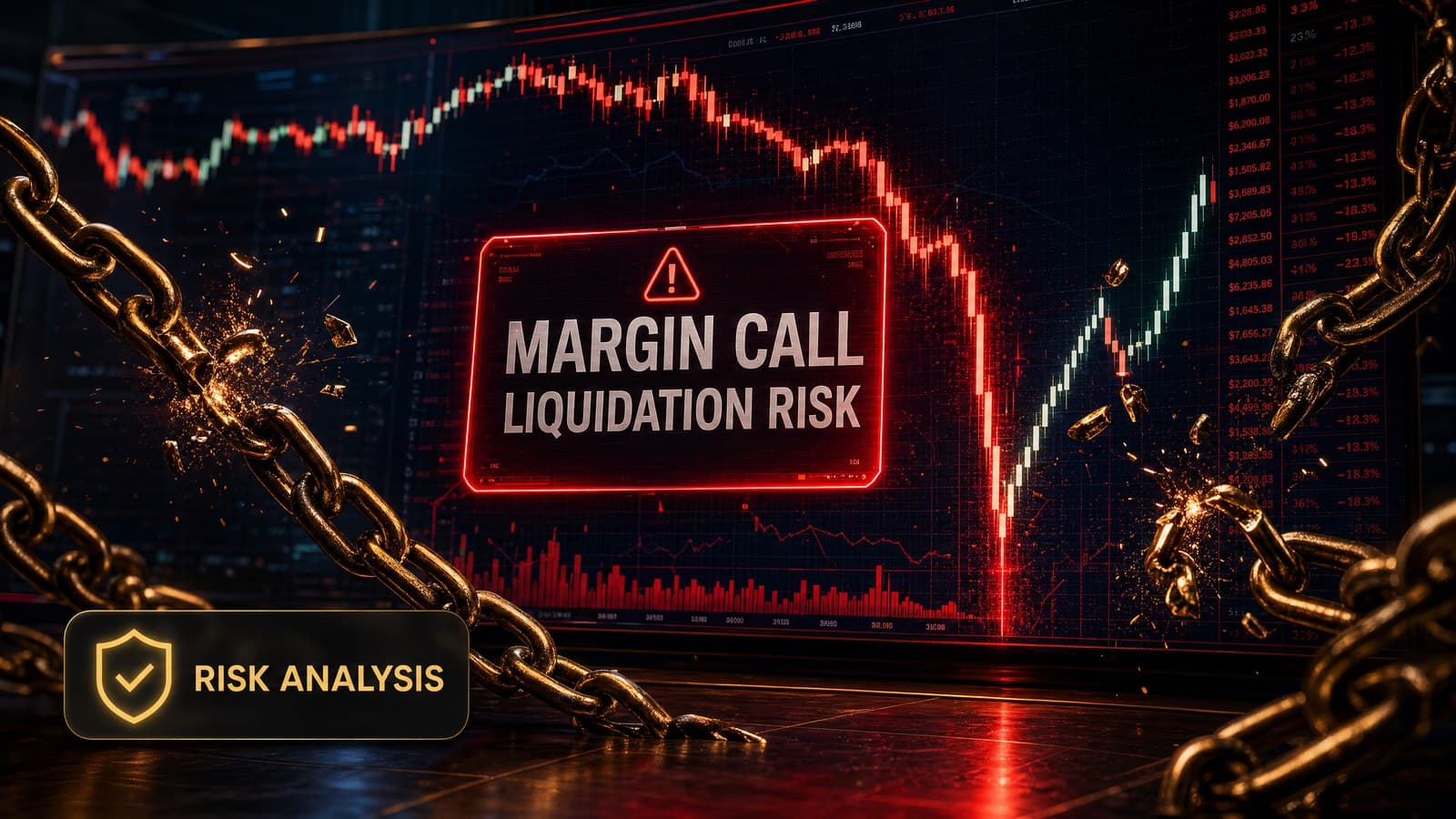
On July 30, 2026, before the New York open, the public equity portfolio of the hedge fund Situational Awareness was sold to Citadel in a single block trade.
That day, after the open, the semiconductor index jumped 8.19%. Lam Research rose 17.98% - its strongest day since 1999. Micron rose 18.36%.
And what drove the rebound was a set of results that reinforced precisely the thesis that fund had been built on.
Who He Is
Leopold Aschenbrenner was born in Germany to two doctors. He enrolled at Columbia University at 15 and graduated in 2021, aged 19, as valedictorian, with a degree in economics and mathematics-statistics. At Columbia he also co-founded the campus chapter of Effective Altruism.
Then: research at Oxford's Global Priorities Institute, and a role at the FTX Future Fund from roughly February to November 2022 - which he left just as the fund collapsed into one of the largest investment frauds in history. "We were a tiny team, and then from one day to the next, it was all gone and associated with a giant fraud," he said of that period.
In 2023 he joined OpenAI's Superalignment team, led by Jan Leike and Ilya Sutskever - the team whose job was to solve the problem of controlling systems smarter than us. He is a co-author of the paper "Weak-to-Strong Generalization," presented at ICML.
In April 2024, OpenAI fired him.
On the circumstances - and here care is required
The documented background: in early 2023 a hacker breached OpenAI's internal employee messaging forum. Employees were told in April 2023, and the incident was not publicly disclosed at the time. The memo Aschenbrenner sent to the board regarding security followed that incident.
The two sides gave different accounts of the reason for the dismissal, and nothing here adjudicates between them. What is documented is what followed: about a month after his firing, in May 2024, the Superalignment team was dissolved - both Sutskever and Leike departed. Leike wrote on his way out that safety culture and processes had "taken a back seat to shiny products."
The Document
In June 2024, two months after the firing, Aschenbrenner self-published a roughly 165-page, ~50,000-word document titled "Situational Awareness: The Decade Ahead."
Its opening line: "Virtually nobody is pricing in what's coming in AI." The title comes from its central claim - that only a handful of people grasp what is happening: "There are perhaps a few hundred people, most of them in San Francisco and the AI labs, that have situational awareness."
The document is dedicated to Ilya Sutskever.
The argument is a single chain: counting orders of magnitude in compute leads to AGI around 2027, from there to an intelligence explosion, from there to decisive advantage - and therefore to massive infrastructure buildout, security lockdown and government involvement.
And the third part is the one that concerns us here.
The Part That Landed: Electricity
In "Racing to the Trillion-Dollar Cluster," Aschenbrenner made a claim that sounded unusual at the time: the bottleneck of the AI buildout would not be chips and would not be capital. It would be power.
He laid out a ladder: a roughly one-gigawatt training cluster in 2026 costing tens of billions; roughly ten gigawatts in 2028; and roughly 100 gigawatts by 2030.
And his practical answer was natural gas. He wrote that the power is physically available in the United States - that the Marcellus and Utica shales alone produce about 36 billion cubic feet a day, "enough to generate just under 150GW continuously" - and that the obstacles are not physical but regulatory: "The barriers to even trillions of dollars of datacenter buildout in the US are entirely self-made."
And what has happened since - an honest scorecard, both ways
What landed:
Power as the binding constraint - he identified it roughly six months before industry consensus. A gigawatt-scale cluster costing tens of billions in 2026 - accurate. AI consuming about 5% of US electricity production in 2026 - almost exactly right. And behind-the-meter natural gas, specifically from Marcellus - landed.
And this is not distant history. It is what we covered this week: AEP reached 69 gigawatts of contracted demand through 2030; Dominion disclosed 53.8 gigawatts of data center capacity in Virginia; and Chevron signed a 20-year agreement to supply 2.67 gigawatts behind the meter to Microsoft - an oil company selling power directly to a hyperscaler, exactly the model he described.
And what did not land - which matters just as much:
The out-year power projections were far too aggressive - 20% of US electricity production by 2028 and 100% by 2030 are far from any independent forecast. AGI by 2027 is unresolved, and the milestone he himself set - a "drop-in remote worker" - has not arrived. And his political-economy predictions failed broadly: no government project, no lab merger, no multi-trillion appropriation. His expectation that open source would fade did not materialize either.
The methodological criticism also deserves stating: the "counting the OOMs" method extrapolates trend lines without accounting for diminishing returns, and the "unhobbling" component is stacked without rigorous justification.
The accurate picture: he was right about the physics and economics of the infrastructure, and wrong about the politics and the timelines.
And Then He Bet on Himself
The document brought him the capital. Patrick and John Collison (Stripe founders), Nat Friedman and Daniel Gross seeded a hedge fund he launched in 2024 - and he named it after the document: Situational Awareness. The offering formally commenced in September 2024, with the first actual sale in November. Reported seed capital: roughly $225 million.
The thesis was the document, translated into positions: long the physical infrastructure of AI - power, memory, compute - and short software companies expected to suffer. In his words: "the most valuable assets in the AI era may not be algorithms, but electricity and computing power."
And it worked. Far beyond anything reasonable.
According to the Financial Times, which reviewed an investor letter dated July 24, 2026, the fund returned 439% net in the first half of 2026 - and more than 1,000% since inception. It built activist-scale positions: 9.4% of Core Scientific, plus holdings in Nebius and SharonAI.
And the reported leverage: roughly four times.
And What Happened in July
In the second half of July 2026, AI infrastructure stocks collapsed.
The reported triggers: the CXMT IPO in China, reports of mass production of Chinese lithography equipment, and fears of hyperscaler overspending. More than a trillion dollars of chip-sector market value was wiped out between July 24 and July 29.
| Index / stock | July 22-23 to July 29 |
|---|---|
| Semiconductor index (SOX) | -15.82% |
| Nasdaq Composite | -5.40% (six consecutive down sessions) |
| Lam Research | -21% |
| Micron | -25% |
And at this particular fund something worse than a decline happened: both sides of the book lost at once.
Why that is devastating, and why here specifically
A long-short fund is supposed to be partly protected: when the longs fall, the shorts are supposed to rise and cushion.
In July 2026 that did not happen. According to the reporting, the AI infrastructure holdings collapsed - Nebius, SanDisk, Micron and CoreWeave each fell more than 35% - while at the same time short bets against software companies such as Adobe went against the fund.
When both sides lose together, leverage does not double the loss - it doubles it twice.
And at four times leverage, a 17% decline in the portfolio wipes out all the equity.
The fund fell about 67% in a single month.
The Transaction
On July 30, 2026, in a transaction executed before the U.S. market open, Citadel purchased the fund's public equity portfolio.
According to the Financial Times, the public book was worth roughly $16 billion before the transaction. After it, roughly $10 billion remained at the fund, including private holdings - among them a stake in Anthropic that Reuters confirmed was not sold.
And what is not known - which I will not write as though it is
The price was not disclosed. None of the primary outlets - the Wall Street Journal, the Financial Times, Reuters, Bloomberg - reported the price or the size of the discount Citadel received. Figures circulating online on this point are not grounded in reporting, and I will not quote them.
And on the margin question, precision matters: CNBC reported that the fund had been "working with prime brokers including Bank of America Corp., Goldman Sachs Group Inc. and JPMorgan Chase & Co. to meet margin calls or wind down positions in an orderly way." That is the exact wording. Reuters explicitly hedged: "It is not clear whether Aschenbrenner's fund faced margin calls from its lenders before striking the deal with Citadel."
In other words: margin pressure - confirmed. The picture of banks pounding on the door demanding cash by morning - that is not what the primary reporting describes.
And one thing that must be said plainly: a claim circulated online that Citadel engineered or timed the selloff in order to buy cheaply. It has no basis in the reporting. It appears in none of the primary sources, and I will not repeat it.
And what the fund did deny: a spokesman said reports that the firm was marketing its Anthropic stake are "not accurate."
And the Timing
And now the part that is hard to read without stopping.
The transaction was executed before the open on July 30.
And that day, after the open:
| Stock / index | July 30, 2026 |
|---|---|
| Lam Research | +17.98% - best day since 1999 |
| Micron | +18.36% |
| SanDisk | +21% |
| AMD | ~+13% |
| Applied Materials | ~+13% |
| Intel | +12% |
| Semiconductor index | +8.19% |
And what drove the recovery?
The results from Lam Research and Microsoft - which directly rebutted the thesis that AI capex had peaked. Azure grew 43% and Microsoft raised its capex guidance. And Lam guided to a jump of more than 20% in a single quarter.
In other words: the thesis Aschenbrenner wrote 165 pages about - that demand for AI infrastructure is real, sustained and accelerating - was reinforced by the results on the same morning his portfolio was sold.
And this has to be said plainly: one green day is not the end of a decline. The semiconductor index had entered a bear market before this leg, and its largest components were still trading far below their highs even after the jump. What the results showed is narrower and more precise: that infrastructure demand is still there, and that the "capex has peaked" thesis was not supported by that quarter's numbers. That is reinforcement for the thesis - not a declaration that the correction is over.
He was right. He simply was not there.
What He Wrote to His Investors
In a letter published on July 31 he opened with the line: "We let you down this month." He conceded that the fund had come close to permanent capital impairment, and reported a decline of about 67% in July - and still a positive return of about 80% for 2026 to date.
Those two numbers together are the whole lesson of this article. A fund still up 80% in a calendar year is, by any ordinary measure, a highly successful fund. And it was still forced to sell its entire public book.
My Angle
A personal opinion of Ilan Abramov - not advice, not a recommendation
There are two lessons here, and only one of them is the one everybody will talk about.
The first, the obvious one: leverage does not merely increase risk. It shortens the time you are allowed to be right.
Without leverage, someone holding this thesis had a terrible month and watched it get vindicated a week later. With four times leverage, that same thesis, in those same stocks, ended in a forced sale on the morning before the recovery. The difference between those two outcomes is not analysis, not research and not intelligence - it is position size.
And this echoes exactly what I wrote here when the Korean market collapsed on margin: those investors did not necessarily pick the wrong stock - Samsung and SK Hynix are real companies. They got the size wrong. The difference is that in Korea it was hundreds of thousands of retail investors. Here it is a professional with institutional prime brokerage, access to information, and a thesis that turned out to be correct. The mechanism does not distinguish between them.
And the second lesson, the less comfortable one: your vindication does not arrive on your schedule.
The market is under no obligation to confirm your thesis within the window you can hold. It can confirm it the day after you are wiped out - and that is precisely what happened here, literally, by a matter of hours.
Which is why the right question before any position is not "am I right" but "how long can I stay right if the market does not agree with me immediately." Anyone whose answer to that depends on their broker does not really own the position.
And what I hold for the other side, because it is owed: Aschenbrenner was not an amateur and not someone who failed to understand risk. He built a thesis that proved correct in its substantive parts, and read the electricity story before almost everyone. And that is exactly what makes this story important - because if it happened to him, the assumption that "it won't happen to me because I understand the market" is the most dangerous assumption in the room.
And what I will watch: whether a second wave arrives. The Financial Times reported that Goldman Sachs and JPMorgan demanded additional collateral from funds concentrated in the hardest-hit sectors, and that roughly 16% of Goldman's prime brokerage financing book was linked to AI memory stocks. When system-level leverage is high, one fund forced to sell pushes prices down and creates margin calls at others. If more forced liquidations appear in the coming weeks, this was not an isolated incident - it was the first one.
Summary
In June 2024 Leopold Aschenbrenner wrote the document that shaped how much of the market thinks about AI infrastructure, arguing that electricity - not chips - would be the binding constraint, and that behind-the-meter natural gas would power the data centers. Both calls landed, and this week we saw them in the earnings reports.
He built a fund on that thesis, returned 439% net in six months at four times leverage - and in July 2026, when both sides of the book lost at once, it fell about 67% in a month. The public portfolio, worth roughly $16 billion per the Financial Times, was sold to Citadel before the open on July 30.
And that day, after the open, the semiconductor index jumped 8.19% and Lam Research posted its best day since 1999 - on results that reinforced his thesis. Not because the decline was over, but because infrastructure demand proved to still be there.
The distance between "I was right" and "I made money" was measured here in hours. And the only thing standing between them was leverage.
Sources: the document "Situational Awareness: The Decade Ahead" by Leopold Aschenbrenner, June 2024, as published at situational-awareness.ai, including the quotations cited; reporting by the Wall Street Journal, the Financial Times, Reuters, Bloomberg and CNBC on July 30 and 31, 2026 regarding the Citadel transaction, the size of the portfolio, the fund's position with its prime brokers and statements on its behalf; Aschenbrenner's letter to investors as published on July 31, 2026; the letter of July 24, 2026 as reported by the Financial Times; the fund's regulatory filings; stock and index figures are closing changes verified against daily trading data. The price paid in the transaction and the size of any discount were not disclosed by any source, and are not presented here. Data accurate as of the time of writing. Nothing herein constitutes a forecast, recommendation or advice - see the full disclaimer at the bottom of the page.


