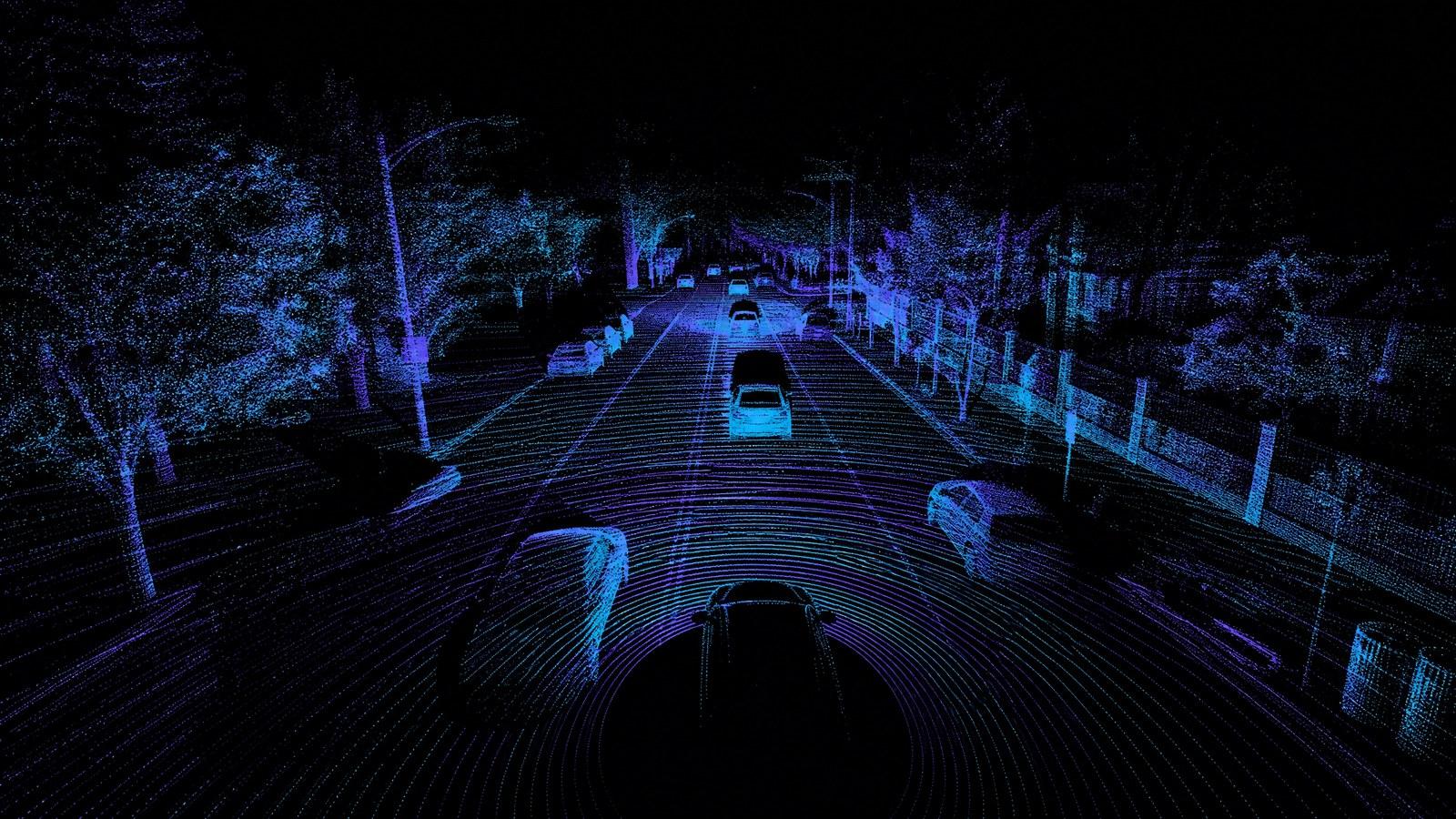
MicroVision (NASDAQ: MVIS) reported third-quarter 2026 results on Wednesday, October 28, after the close. Revenue reached $2.4 million, almost ten times the $0.24 million of the year-earlier quarter, and gross margin reached 50%. On the other hand, the operating loss widened to $21.3 million. The company left its full-year revenue guidance at $10 million to $15 million.
Errors or inaccuracies are possible. Spotted something that looks wrong? Write to me and I will correct it.
What Was Reported
| Q3 2026 | Q3 2025 | Change | |
|---|---|---|---|
| Revenue ($ millions) | 2.40 | 0.24 | 9.96x |
| Gross profit (loss) | 1.20 | (0.72) | From loss to profit |
| Gross margin | 50% | Negative | From negative to 50% |
| Research and development | 13.2 | 8.0 | +65.2% |
| Sales, marketing, general and administrative | 9.4 | 4.0 | +132.4% |
| Operating expenses | 22.5 | 12.0 | +87.7% |
| Operating loss | 21.3 | 12.7 | +67.7% |
| Net loss | 12.2 | 14.2 | -14.0% |
| Loss per share ($) | 0.45 | 0.72 | -37.5% |
| Adjusted EBITDA | (11.1) | (11.7) | -5.6% |
| Average shares (millions) | 27.4 | 19.7 | +39.0% |
Source: MicroVision's third-quarter 2026 earnings release, October 28, 2026, filed with the SEC on Form 8-K as Exhibit 99.1. "Adjusted" is a non-GAAP measure. Second-quarter revenue: $1.47 million.
Sequentially, revenue rose 62.9% from the second quarter, and the nine-month total is $4.8 million against $1.0 million in the year-earlier period. Operating expenses rose following the Luminar acquisition, according to the release, and still fell about 7.5%, per the company, from the first-half quarterly average of $24.4 million. The company also reports a significant plan to reduce expenses and cash burn, implemented in the fourth quarter, without numerical detail.
What Sits Between the Operating Loss and the Net Loss
The net loss fell while the operating loss grew, and a gap of $9.1 million between them is explained in the lines below the operating line:
| $ millions | Q3 2026 | Q3 2025 |
|---|---|---|
| Operating loss | (21.3) | (12.7) |
| Interest expense | (1.9) | (2.2) |
| Revaluation of derivative liability | (0.5) | 1.1 |
| Revaluation of warrant liability | 3.6 | (0.3) |
| Other income | 8.0 | 0.1 |
| Taxes | (0.03) | (0.2) |
| Net loss | (12.2) | (14.2) |
Other income, $8.0 million against $0.1 million a year earlier, is the large item. The release states that the quarter's results include a cash grant of $6.3 million from the German government for research and development activities, and in addition the adjusted EBITDA reconciliation neutralises a settlement gain of $1.7 million. The grant does not appear among the adjustments, so adjusted EBITDA, a loss of $11.1 million, includes it. Without it the adjusted loss would have been about $17.4 million, a calculation based on the report's figures. The revaluation of the warrants added another $3.6 million of non-cash gain.
Guidance, and the Number It Requires
2026 revenue guidance stayed at $10 million to $15 million; the company also published it in a business update on October 7. The nine months accumulated $4.8 million, so the guidance requires revenue of $5.2 million to $10.2 million in the fourth quarter: 2.2 to 4.2 times the third quarter. This is a calculation based on the company's range. As the basis for its confidence in the guidance the company cites high demand for IRIS sensors, the production launch of MOVIA Pro, a purchase-order backlog and accelerating shipment schedules; the release does not detail the size of the backlog, and does not break revenue down by market or customer. On the balance sheet, inventory rose to $4.4 million from $0.7 million at the end of 2025, and receivables to $1.4 million from $0.05 million.
For 2027 the company expects revenue of at least double the level expected in 2026, and cash burn of about $40 million, a decline of about a third from the current level. In the second-quarter update the company spoke of annual burn of about $60 million.
Who Funds It
Cash totalled $28.9 million. Cash from operations in the quarter was negative $13.6 million, and in the nine months negative $49.2 million, against $43.3 million a year earlier: $28.9 million is about two quarters at the latest quarter's pace. The investment portfolio, $42.5 million at the end of 2025, was fully realised. Current liabilities, $47.1 million, include notes of $22.6 million and a derivative liability of $6.3 million, and they exceed current assets, $37.8 million. Shareholders' equity fell to $22.7 million from $55.5 million.
In the nine months the company raised $20.6 million from notes and $17.3 million from issuing shares and warrants, against $73.3 million from offerings in the year-earlier period, and paid $33.2 million in cash in business combinations. In August it sold 6.8 million shares with 6.8 million warrants at a combined price of $2.50 per unit, for net proceeds of about $15.6 million. The warrants are exercisable at $2.50 for five years. The average share count rose 39% against the year-earlier quarter.
What the Company Talks About
The release lists areas: industrial (mining, construction, logistics, autonomous hauling); defense, including Overland AI and unmanned ground vehicles; intelligent transportation, with an exclusive alliance to bring Blue-Band's contracts and revenue; an autonomous mobility pilot in Asia-Pacific; the semiconductor unit; and Scantinel, which introduced a module for high-speed optical connectivity in AI data centers. None of the areas is backed by a revenue figure. In terms of the value chain, the release presents no figure that indicates pricing power, dependence on a single customer or the size of the backlog, so it is hard to tell from the report whether the company sits in the narrow link of the chain or one of the easy links.
The Two Sides of the Debate
The bullish reading rests on revenue rising from $1.47 million in the second quarter to $2.4 million, gross margin reaching 50%, and the company citing demand, a purchase-order backlog and accelerating shipments as the basis for its guidance. Operating expenses have already come down from the first half, the company reports further reductions in the fourth quarter, and cash burn is meant to fall to about $40 million in 2027.
The bearish reading points to the operating loss widening 67.7%, and the net loss falling thanks to other income, a research and development grant and a revaluation of warrants. The cash, $28.9 million, covers about two quarters at the current pace, current liabilities exceed current assets, and every raise dilutes, after the share count already rose 39%. The guidance requires a jump of 2.2 to 4.2 times in a single quarter, and the company lists among its risk factors the ability to operate with limited cash, to raise capital and to remain listed on Nasdaq.
The Stock
The report came after the close on October 28, and the investor call was scheduled for 4:30 p.m. Eastern, so the trading reaction has not yet been measured. The stock closed on the day of the report, before the release, at $1.30.
What Will Decide It
The next report will test whether fourth-quarter revenue falls within the $5.2 million to $10.2 million range, and whether it arrives with a backlog backed by a figure; whether gross margin stays around 50% as volume grows; what operating expenses are after the reductions, without grants and other income in the bottom line; and what happens to cash, which reaches year end after another quarter of burn. The bearish reading would strengthen if revenue stays at the third quarter's pace while the cash shrinks. The bullish reading would strengthen if revenue reaches at least the lower end of the guidance and burn falls in line with what the company set.
Ilan Abramov, anyone on his behalf, or anyone on behalf of the authors may hold securities mentioned in this article, and holdings change from time to time.


