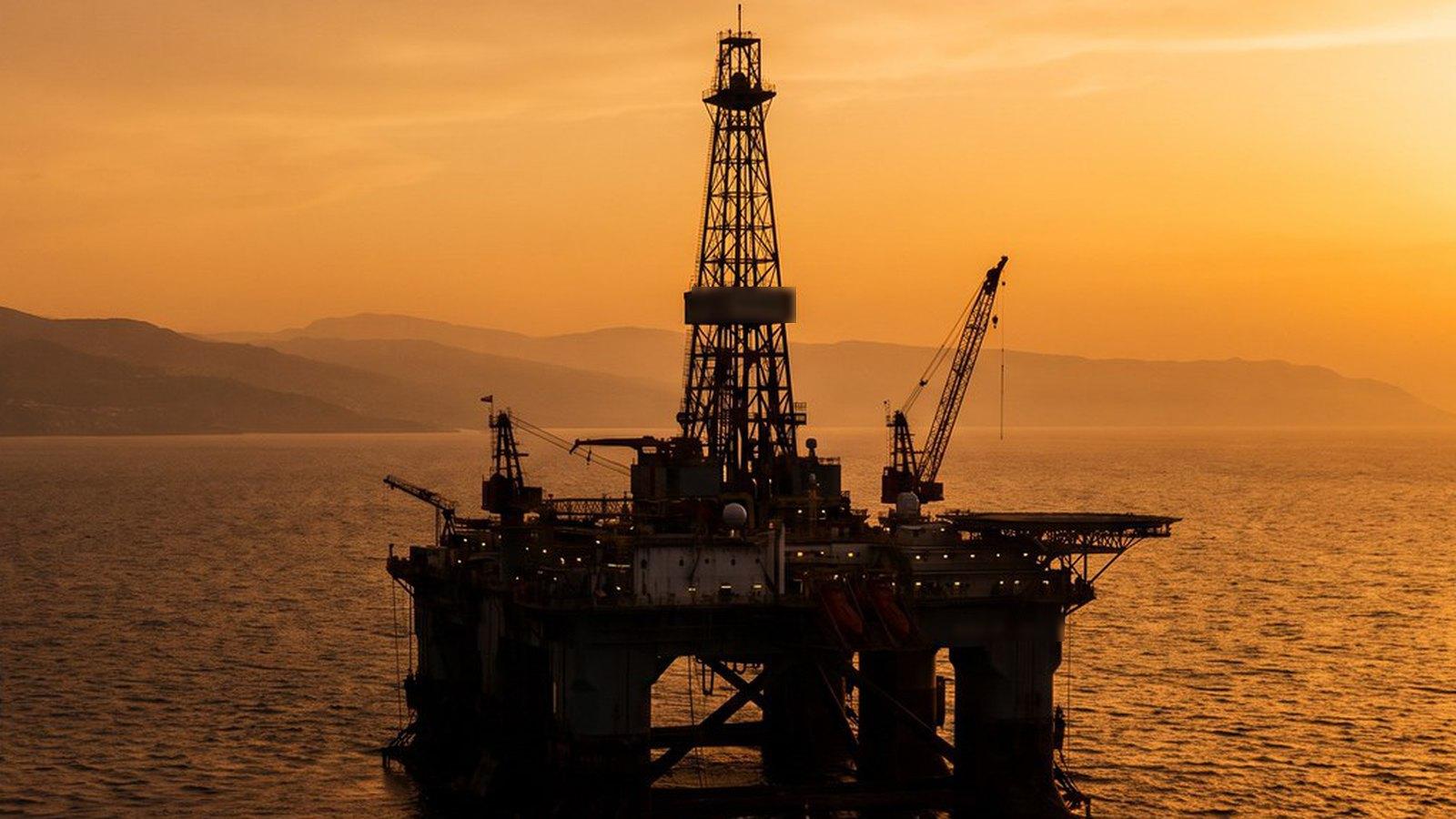
In 2025 Israel consumed and exported to its neighbours 26.8 BCM (billion cubic meters) of natural gas, from three offshore fields: Leviathan, Tamar and Karish. Gas generated about 74% of Israel's electricity that year, while about 46% of the volume was exported to Egypt and Jordan. The same fields, the same platforms and the same transmission system therefore carry both the country's energy security and long-term export contracts, and the tension between those two roles shapes the regulation.
Errors or inaccuracies are possible. Spotted something that looks wrong? Write to me and I will correct it.
Why it matters
According to the Natural Gas Authority's 2025 review of the gas sector (published in June 2026), domestic consumption reached a record 14.4 BCM in 2025, up 4.1% from 2024. The Authority attributes the increase mainly to the continued shift of power generation from coal to gas, and to the use of gas as backup for renewables. Average multi-year growth in domestic consumption has been about 6% a year since 2014.
The power sector's dependence shows in the numbers: it consumed about 11.4 BCM in 2025, about 79% of domestic demand. Gas's share of the electricity generation mix reached about 74%, the highest to date according to the Authority.
Exports are the other side of the equation. Israel began exporting gas in 2017, and volumes grew significantly from 2020, when Leviathan began producing. According to the Authority's 2025 review, about 58 BCM have been exported to the neighbouring countries in total so far. In 2025 exports reached 12.4 BCM: 72% was recorded as exports to Egypt and 28% to Jordan, although part of the gas exported through the Jordan-North line ends up in Egypt.
Gas is also a source of state revenue through two channels. According to the Knesset Research and Information Center (May 2025), the state received about NIS 13.9 billion in natural gas royalties in 2012-2024, and about NIS 2.31 billion in 2024 alone: about NIS 1.02 billion from Leviathan, about 0.78 billion from Tamar and about 0.51 billion from Karish. The second channel is the windfall profits levy (the Sheshinski levy). According to the annual report of the Citizens of Israel Fund, the levy is progressive, is collected only after the investment in a field has been fully recovered plus a set return, and starts at a rate of 20%. Levy revenue is deposited in the Fund: in 2025 it received deposits of $350.7 million, its assets totalled about $2.8 billion at year-end, and it transferred an annual allocation of $51.7 million to the state budget.
How the sector works
The chain has four links. The rights holders in the fields produce the gas and sell it under bilateral contracts to large customers. Israel Natural Gas Lines (INGL), a government company, transports it at high pressure. Regional distribution companies carry it at low pressure to factories and smaller consumers. At the end are the consumers: power plants, industry and export customers.
| Link | Who | 2025 figure |
|---|---|---|
| Production | Leviathan, Tamar, Karish | 11, 10 and 5.8 BCM |
| Transmission | INGL | about 1,000 km of pipeline, 45 customers |
| Distribution | Five regional companies, and INGL in Jerusalem | about 870 km, 203 active consumers |
| Domestic consumption | Power, cogeneration, industry | 11.4, 1.55 and 1.53 BCM |
| Exports | Egypt, Jordan | 8.9 and 3.5 BCM |
Trading is mostly bilateral, between field owners and large customers. Since July 2023 the Natural Gas Authority has published an average quarterly price for the domestic market, based on suppliers' reports. In 2025 the average price ranged around $4.4-4.5 per MMBtu. Alongside bilateral sales there is a secondary market, in which consumers sell gas to each other: it totalled about 2 BCM in 2025, 13.8% of the gas supplied to the domestic market.
The main regulatory framework is the Gas Framework (Mitve HaGaz), approved by Government Decision 476 in August 2015. According to the State Comptroller (2021), the framework set, among other things, the development timelines for the fields, supply redundancy and the structural change in ownership, and granted the holders regulatory stability - a commitment the Comptroller noted ends in 2025.
Exports require approval: export approvals are granted by the Petroleum Commissioner, with the minister's consent and after consultation with the Natural Gas Authority. Gas leaves through three lines: the subsea EMG line from Ashkelon to El-Arish, the Jordan-North line that connects to the Jordanian system (from where part of the gas continues to Egypt), and the Jordan-South line serving the Dead Sea plants.
The players
According to the Natural Gas Authority's review, in 2025 Leviathan supplied about 41% of the gas, Tamar 37% and Karish 22%.
- Leviathan - began producing in December 2019. Chevron is the operator with 39.7%, under a concession that runs to 2044, according to its annual report. According to NewMed Energy's website, its stake in the field is 45.34% and Ratio's is 15%. According to NewMed, the completion of a third pipeline in March 2026 raised maximum production capacity to about 1.5 BCF a day. That figure is not defined in the same way as the Natural Gas Authority's annual capacity figures cited below, and comes from a different source.
- Tamar - began producing in March 2013. Chevron operates it with 25%, under a concession that runs to 2038.
- Karish - began supplying the domestic market in October 2022. According to the State Comptroller (2021), under the Gas Framework Delek and Noble sold all their rights in Karish and Tanin to Energean Israel, wholly owned by the British Energean plc, bringing another operator into the market.
- INGL - transports gas to 29 power plants, 7 of them owned by the Israel Electric Corporation and 22 by private producers, and to export customers in Egypt and Jordan. Since September 2025 it has also held a distribution licence for the Jerusalem area, for 25 years, after the licence of Rotem was revoked.
- The large consumers - the Israel Electric Corporation used about 5.1 BCM in 2025 and private power producers about 6.3 BCM. IEC's share of gas demand for power generation was about 39%, on a downward trend since the 2017 electricity sector reform.
Chevron reports net production in Israel of 581 million cubic feet a day in 2025, against 592 in 2024.
Growth drivers
Expanding production capacity. According to the Natural Gas Authority, work carried out in 2025 and complementary steps through 2026 are expected to lift Tamar's production capacity from about 11 to about 16 BCM a year, and Leviathan's from about 12 to about 14 BCM a year. According to Chevron's first-quarter 2026 report, the expansion projects at Tamar and Leviathan have achieved start-up. In January 2026 a final investment decision was taken on a further Leviathan expansion, expected to bring it within several years to production capacity of about 21 BCM a year. Chevron writes in its annual report that the expansion will support increased exports to Egypt.
New export contracts. In 2025 three export approvals were granted for agreements signed by the Leviathan partners: two agreements totalling 4.5 BCM with industrial customers in Jordan, and in December 2025 a deal of about 131 BCM to Egypt, valued at about NIS 112 billion - according to the Authority, the largest export deal in the country's history.
More export infrastructure. The Ramat Hovav-Nitzana pipeline, about 66 km long with a compressor station of about 35 MW, is expected to start operating toward the end of 2028 with capacity of about 6 BCM a year. According to INGL's reports, capacity was allocated 41.8% to Leviathan, 41.8% to Tamar and 16.4% to Energean, and the exporters are expected to pay a connection budget of about NIS 2 billion.
Continued shift from coal. INGL connected combined-cycle units 70 and 80, which replace coal units 1-4 at Orot Rabin, completed the connection of the four converted units at Rutenberg, and is at an advanced stage of connecting units 5 and 6 at Orot Rabin.
The distribution network. In 2025, 42 consumers were connected to the distribution network, an annual record, and consumption on it rose by about 29.7% to 0.56 BCM.
Challenges and risks
Concentration and security exposure. All domestic supply rests on three offshore platforms, and within less than a year two of them were shut down twice. On 13 June 2025 the energy minister ordered a temporary halt to gas flows from Karish and Leviathan, against the backdrop of the war with Iran, and on 25 June the Ministry of Energy announced that operations could resume. During the campaign a state of emergency was declared in the gas sector, allowing gas to be allocated to all domestic consumers.
It happened again in 2026. According to the Israel Electric Corporation's quarterly report to 30 June 2026, when Operation "Roaring Lion" began on 28 February 2026 the Ministry of Energy ordered Leviathan and Karish to stop operating, and Noga, the system operator, instructed IEC to run its coal units. A state of emergency was again declared in the gas sector, and the minister's instructions setting supply priority by sector remained in force until 3 April 2026. According to Chevron, operations at Leviathan resumed as of 2 April 2026. The date Karish resumed does not appear in the primary sources checked for this article.
Lower exports. Exports fell by about 6% in 2025, and exports to Egypt fell by 10.9%. The Authority attributes this to temporary operational and security constraints and to maintenance work, and notes that export flows dipped temporarily in June and November.
Tension between exports and the domestic market. Domestic demand keeps rising, while large export contracts are being signed. The Egypt deal was approved with conditions: absolute priority for the domestic market, the ability to reduce exports in certain situations, and a commitment to supply the domestic market under price formulas based on the Gas Framework.
Uncertainty over reserves. The Knesset Research and Information Center derived reserves at the start of 2025 from start-2024 estimates minus 2024 production: 822.6 BCM on the Ministry of Energy's estimate, against 1,011.6 BCM on the gas companies' estimate - a gap of about 189 BCM.
The regional environment. In its third-quarter 2026 report, after production at Leviathan had resumed, Chevron wrote that its physical operations have not been materially impacted to date, but that the situation in the region is volatile and could lead to operational restrictions and supply disruptions. Emergency authorities instructed IEC to hold a coal stock of 1.7 million tonnes from August 2026, and in its June 2026 report the company estimated, given the heavier use of coal during the war, that it would meet the target by the end of October 2026.
Power sector dependence. With about 74% of electricity generated from gas, a disruption to gas supply is also a risk to electricity supply.
What to watch
- What will actual 2026 production from Tamar and Leviathan be, after the expansions started up and after the March shutdown?
- Progress on the Ramat Hovav-Nitzana pipeline, whose start-up is set for toward the end of 2028.
- The fifth competitive round for gas exploration: the Petroleum Council recommended it in November 2025, and publication is expected during 2026. The fourth round ended in March 2025 with six licences to a group of SOCAR, bp and NewMed.
- The update to the balancing regime in the transmission system: a draft decision was published for consultation at the end of November 2025.
- The gas sector master plan to 2050 that INGL is preparing at the Authority's direction, and the new economic framework for the distribution network.
- Will policy on the state's share of gas profits be updated, now that the framework's regulatory stability period ended in 2025?


