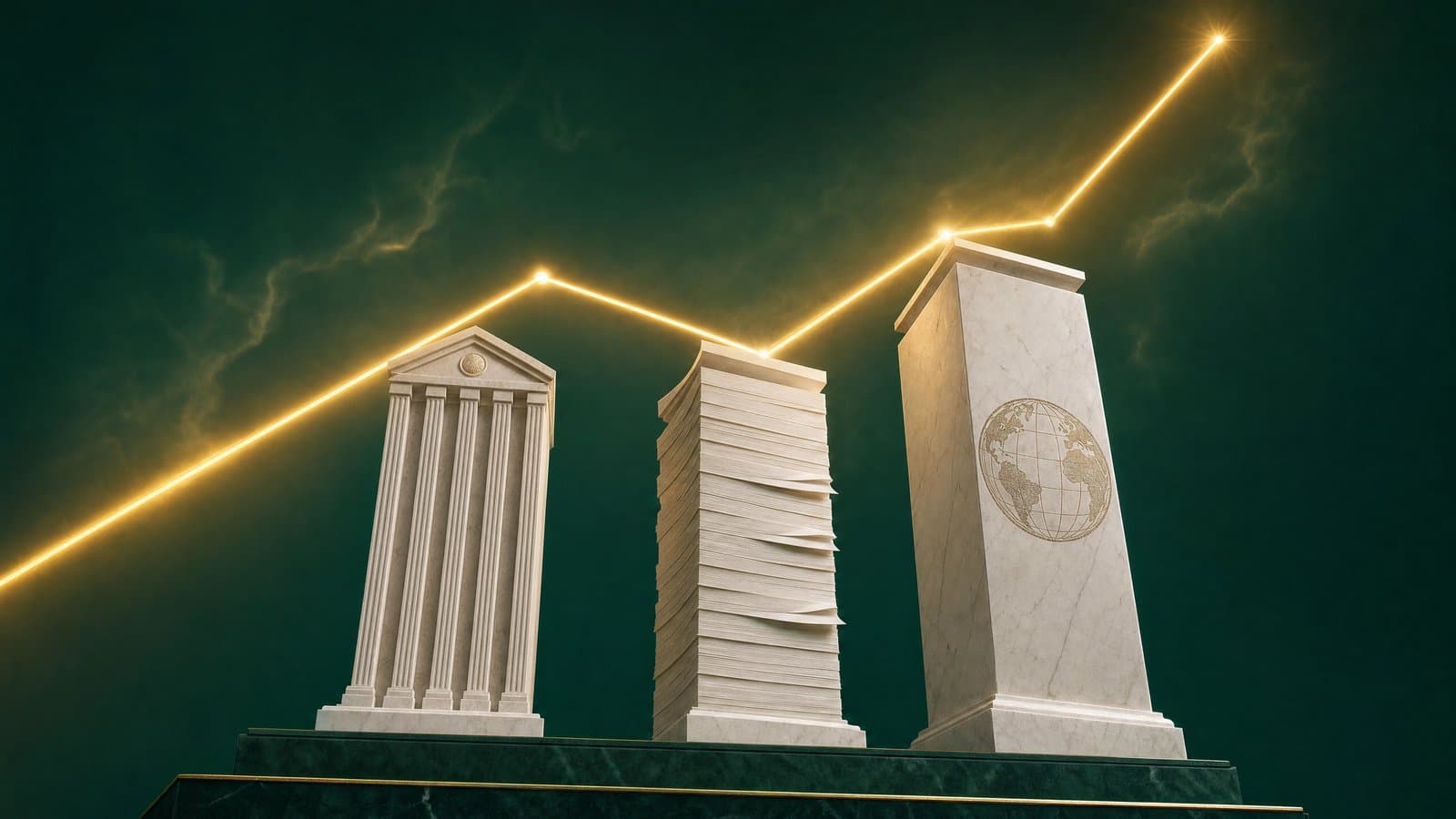
Introduction: Why a Framework and Not a Forecast
Most investors look at the chart and ask "where is this going?" The right question is different: which forces are acting on the market now, and what does each of them say? Whoever understands the forces does not need to guess - they know what to check, when, and why it matters.
Force 1: The Fed's Interest-Rate Policy
The Federal Reserve is the most influential player in the American market. The basic rule: a rising rate compresses multiples and makes money more expensive; a falling rate pushes money into risk assets.
What you actually track:
- The PCE index - the Fed's preferred inflation gauge. Its direction relative to the 2% target determines the bank's room to maneuver
- The employment reports (NFP) - a strong labor market gives the Fed a reason to wait; a consistent weakening brings rate cuts closer
- Futures pricing (FedWatch) - what the market itself expects to happen, and at what probability
The important principle
The market does not respond to the rate itself - it responds to the gap between what happens and what it priced in advance. A quarter-point surprise moves more than an expected half-point move.
Force 2: Earnings Season
Four times a year, the companies open the books - and the market recalibrates.
What to track:
- The largest companies in the index - when concentration is high, a handful of technology companies decides the direction of the whole index
- The gap between results and expectations - a "good" report with weak guidance gets punished; the opposite sometimes jumps
- The breadth of the surprises - are most companies beating expectations, or only the big headlines?
Force 3: Geopolitics
Geopolitical risk always remains in the background - and markets tend to ignore it in routine, until they cannot. Wars, energy crises and trade tensions erupt into pricing suddenly, and so they are measured differently: not "what will happen" but "how much will it cost if it happens."
How You Connect the Three Forces
| Force | What you check | Update pace |
|---|---|---|
| The Fed | PCE, employment, futures pricing | Monthly |
| Earnings | Results vs. expectations, guidance | Quarterly |
| Geopolitics | Energy, trade, tensions | Ongoing |
The conclusion: when you break the market down into forces, decisions stop being emotional. And in an environment of uncertainty - risk management matters more than any forecast: large, unmanaged positions are the real danger, not the direction of the market.
This article is for educational purposes only and does not constitute investment advice.


